
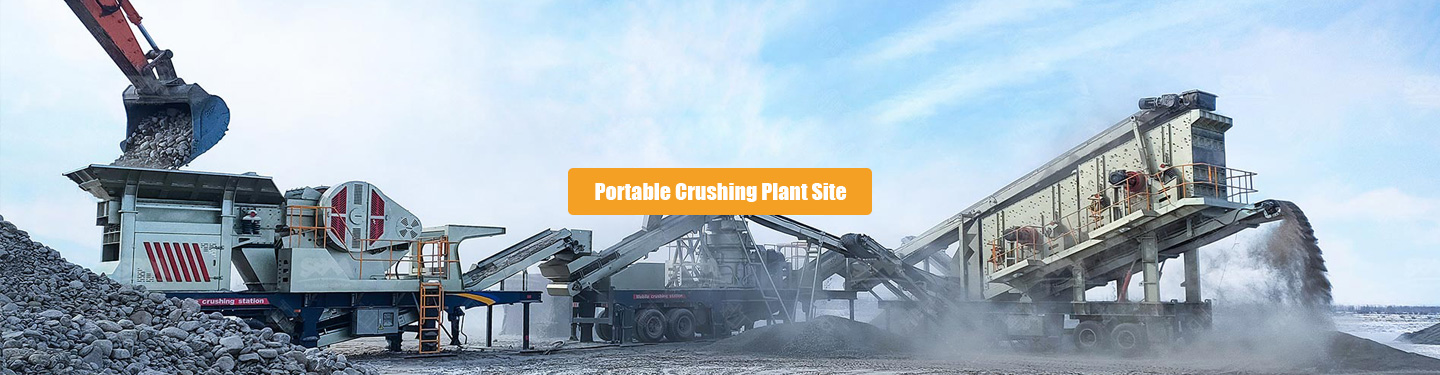
A vibrating feeder is a crucial piece of equipment widely used in various industries such as mining, construction, metallurgy, and chemical processing, and other industries to efficiently and continuously feed bulk materials into processing machines or conveyors. Its primary function is to transfer raw materials smoothly and evenly from storage bins or hoppers to crushers, screens, or other machinery.
What Is a Vibrating Feeder?
A vibrating feeder is a mechanical device designed to transport and regulate the flow of bulk materials from a storage hopper or bin to the next processing stage. It uses vibration to move materials forward at a controlled rate, ensuring a continuous and uniform feed.
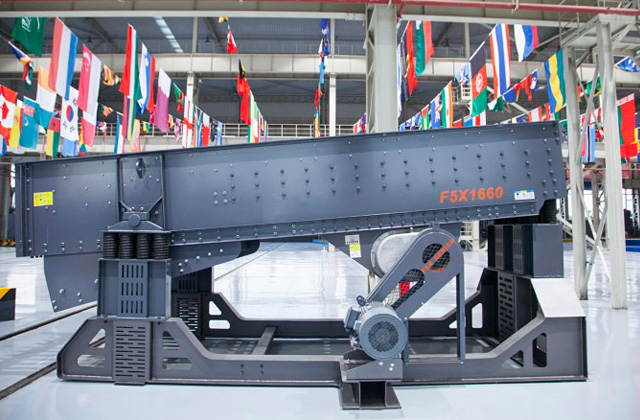
Unlike conventional feeders that rely on gravity alone, vibrating feeders use vibration motors or electromagnetic drives to create controlled oscillatory movement, making them suitable for feeding both fine and coarse materials.
Key Components
-
Drive Unit: Usually an electromagnetic or motor-driven system that generates the required vibrations.
-
Feeder tray or trough: The surface where materials are placed and moved.
-
Vibrating motor or electromagnetic drive: Creates vibration.
-
Springs: Support the feeder and absorb vibration.
-
Base/frame: Holds the entire feeder assembly in place.
How Does It Work?
The vibrating feeder works by producing vibrations through the motor or electromagnetic device, which causes the feeder tray to vibrate and move materials forward steadily. The frequency and amplitude of the vibration can be adjusted depending on the type of material and the required feed rate.
The vibration intensity and frequency can be adjusted to control the flow rate, making it possible to handle materials with different sizes, weights, and flow characteristics. The motion generated minimizes material clogging and segregation, maintaining uniform material distribution.
Specifications – Technical Data
| Model | Feed Chute Size W×L(mm) |
Obliquity(°) | Bar Length (mm) |
Maximum Feed Size (mm) |
Speed (r/min) |
Capacity (t/h) |
Power (kw) |
Matched Jaw Crusher |
| F5X1036H | 1000×3600 | 8 (0-15) | 2×900 | 600 | 650-900 | 350 | 15 | HJ98/HJ110/ PEW760/PEW860/ PE600×900/ PE750×1060/ PE900×1200/ PFW1214Ⅱ/ PFW1315Ⅱ/ PFW1318Ⅱ |
| F5X1245H | 1200×4500 | 2×900 | 700 | 600 | 22 | HJ110/ PE900×1200/ PFW1318Ⅱ/ HJ125/PEW1100/ PE1100×1200/ PFW1415Ⅱ |
||
| F5X1260H | 1200×6000 | 3×900 | 700 | 600 | 22 | HJ125/ PE1000×1200/ PEW1100/PFW1415Ⅱ |
||
| F5X1560H | 1500×6000 | 3×900 | 900 | 900 | 30 | C6X140/ PE1200×1500 |
||
| F5X1860H | 1800×6000 | 3×900 | 1100 | 1200 | 37 | C6X160/ PE1500×1800 |
||
| F5X2160H | 2100×6000 | 3×900 | 1300 | 1600 | 45 | C6X200 |
Notice:
1. Any change of European Type Jaw Crusher technical data shall not be advised additionally.