
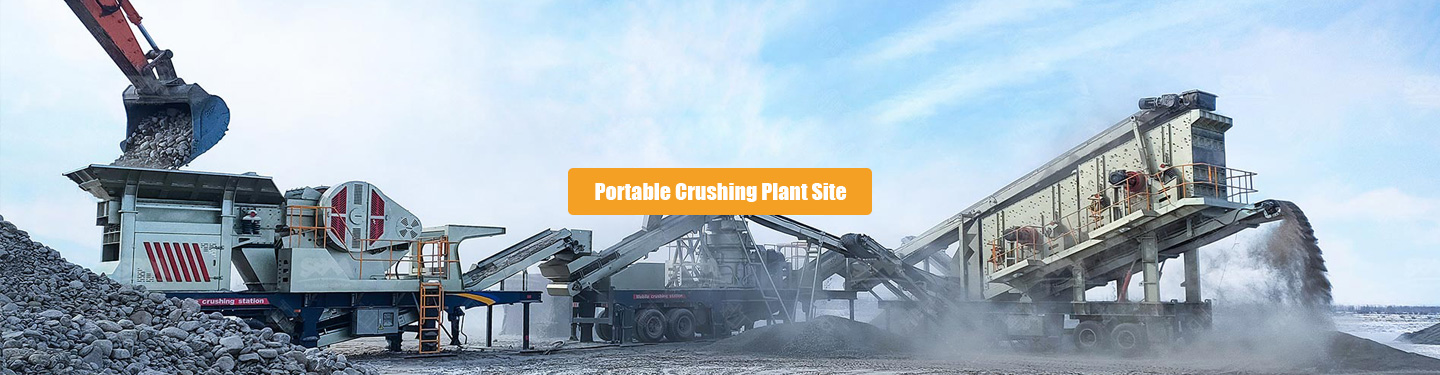
If you’ve spent any time on a hard rock site, you know the difference between a machine that looks good in a catalog and one that actually survives the daily pounding of granite, basalt, or quartzite. Hard rock is a heartbreaker for flimsy equipment. When you’re looking for a portable stone crusher machine for hard rock, you aren’t just buying a motor and some manganese; you’re buying the frame that holds it together and the ease with which your crew can keep it running.
That is why we focus on the NK and K3 Series. These aren’t your average “compact” units. These are mobile powerhouses built with enough structural mass to absorb the violent vibrations of crushing 200+ MPa stone without cracking the chassis. Here is the ground-level truth on why these machines handle the jobs others run away from.
1. Chassis Mass: The Backbone of Hard Rock Crushing
The biggest mistake greenhorns make is ignoring the weight of the machine. Vibration is the silent killer of mobile plants. The NK Series Mobile Crusher utilizes a heavy-duty reinforced chassis design. Take the NK75J, for example; it hits the scales at 39 Tons. That isn’t just dead weight—it’s the stability required to keep the plant from walking across the quarry floor while it’s chewing through 680mm granite chunks.
The K3 Series portable plants take this further with an integrated modular design. A machine like the K3T100-4 weighs in at 45 Tons. This mass is specifically engineered to counteract the high-frequency harmonic vibrations generated when crushing high-hardness materials, ensuring the long-term structural integrity of the frame.
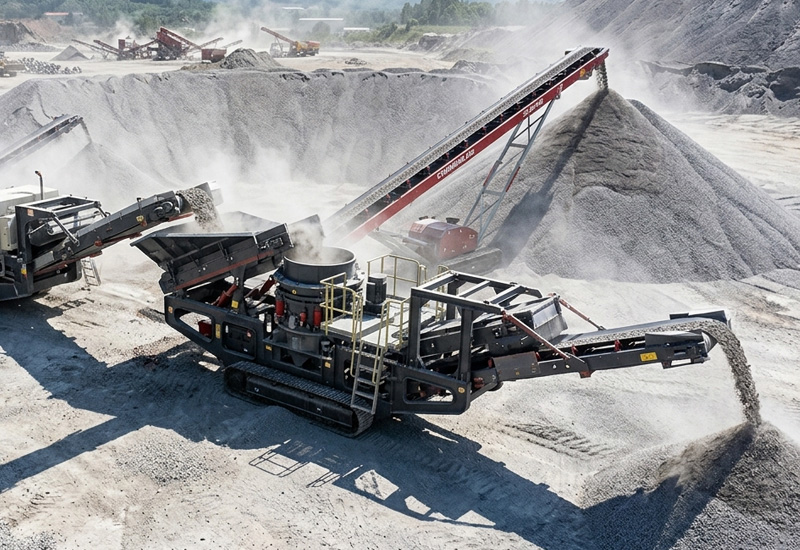
2. Primary Crushing: The PEW Jaw Advantage
For the primary stage, we don’t use standard jaws. We integrate the PEW European Type Jaw Crusher. Why? Because the jaw plates are forged from high-strength, wear-resistant alloys that don’t shatter under the extreme pressure required for hard rock. The V-shaped crushing cavity ensures that the Max Feed capacity is maximized, while the wedge adjustment system allows us to change settings without spending four hours fighting with old-school shims.
3. Secondary Power: The HPT Multi-Cylinder Advantage
When the rock gets tough, you need more than just a cone; you need a hydraulic beast. The HPT Multi-cylinder Hydraulic Cone Crusher (found in the NK300H secondary units) is the gold standard for mobile hard rock crushing solutions. Unlike single-cylinder models that struggle with ultra-hard feed, the HPT’s multi-cylinder design provides superior crushing force and a higher stroke. This gives you a better particle shape—essential for high-spec granite aggregates—while protecting the machine from “un-crushable” tramp iron via its automated hydraulic clearing system.
4. Maintenance Accessibility: Built for the Crew
I’ve seen plenty of “efficient” machines that are a nightmare to fix. On a remote site, if a part takes ten hours to reach, you’re losing thousands. The NK and K3 series are designed with Maintenance Accessibility in mind:
- Hydraulic Opening Mechanisms: No more manual winching. The crusher frames open hydraulically, allowing the crew to inspect or replace wear parts in a fraction of the time.
- Lift-Assist Features: Integrated crane points and swing-out platforms mean my guys can work safely and fast, without needing to rig up makeshift scaffolding in the middle of a dust storm.
- No Foundation Required: These are true portable plants. You level the site, drop the legs, and you’re crushing. No waiting for concrete to cure.
Technical Specifications for Hard Rock Configurations
To prove these aren’t just “marketing numbers,” look at the field data for our primary and secondary hard rock setups:
| Model | Crusher Type | Max Feed (mm) | Capacity (t/h) | Weight (T) | Rock Suitability |
|---|---|---|---|---|---|
| NK75J | PEW Jaw Crusher | 680 | 150-350 | 39 | Granite, Basalt, Quartz |
| NK300H | HPT Cone Crusher | 220 | 110-440 | 42 | Hard Ore, River Pebble |
| K3T100-4 | Integrated Plant | 430 | 70-120 | 45 | All-in-one Hard Rock |
- Is the NK series better for granite than traditional portable plants?
- Absolutely. Traditional “light” portable plants are often adapted from limestone designs. The NK series uses the PEW jaw and HPT cone specifically because they provide the higher crushing force required for granite’s compressive strength.
- How does the machine handle maintenance in remote areas?
- The hydraulic lift-assist and standardized wear parts mean your site crew can perform 90% of maintenance tasks with basic tools and the onboard hydraulic system, minimizing the need for specialized external support.
- Can these machines handle basalt and other abrasive stones?
- Yes. We use high-manganese liners and reinforced jaw plates. The heavy weight (up to 45T) ensures the machine stays stable during the high-energy impacts necessary to break abrasive rock.