
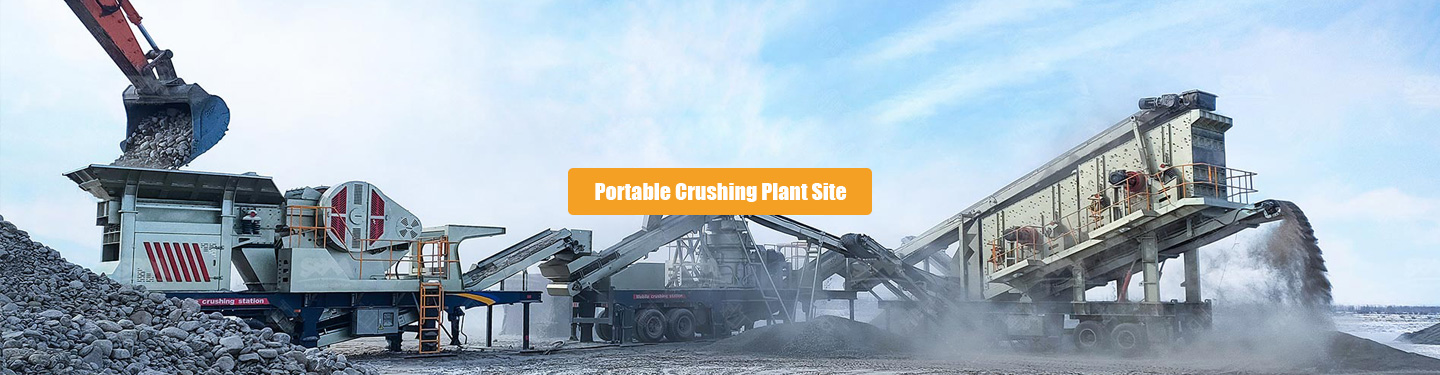
In the world of mining, quarrying, and large-scale construction, crushing stations play a vital role in processing raw materials into usable aggregates and minerals. Among the various types of crushing stations available, the semi-mobile crushing station has emerged as an innovative solution that blends mobility with stability, optimizing operational efficiency and reducing costs.
What is a Semi-Mobile Crushing Station?
A semi-mobile crushing station is a crushing facility that combines the advantages of both stationary and mobile crushers. Unlike fully stationary plants that require fixed installation and fully mobile units that can be transported easily, semi-mobile crushing stations are designed to be relocatable but not frequently moved. They are typically mounted on steel frames or platforms and can be shifted using heavy machinery or rails when necessary.
They serve as an intermediate solution between fixed crushing plants—known for stability and high capacity—and fully mobile crushers—known for flexibility and mobility.
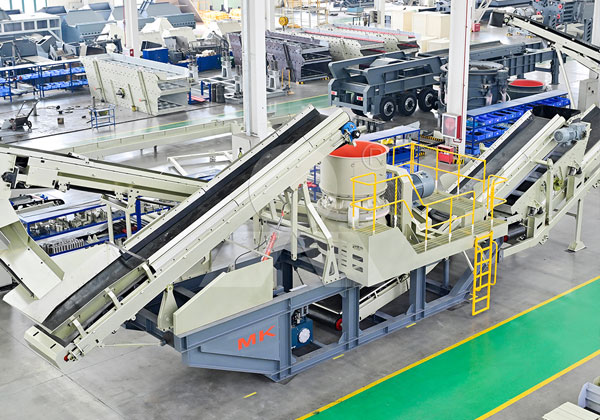
Components of a Semi-Mobile Crushing Station
-
Primary Crusher: Usually a jaw crusher, gyratory crusher, or impact crusher, responsible for the initial reduction of large rock pieces.
-
Secondary and Tertiary Crushers: Depending on the project needs, cone crushers, impact crushers, or VSI crushers are used for further size reduction.
-
Feeding System: Includes vibrating feeders or grizzlies to control the feed rate and size of the input material.
-
Conveyors: Belt conveyors are used to transport the crushed material to the next processing stage or stockpiles.
-
Screening Equipment: Vibrating screens can be incorporated to separate different size fractions of the crushed product.
-
Supporting Structure: Modular steel frames, sometimes with wheels or tracks, enable relocation of the entire crushing station.
Advantages of Semi-Mobile Crushing Stations
-
Flexibility and Mobility: While not as mobile as fully mobile crushers, semi-mobile stations can be relocated with relative ease compared to fixed plants, allowing them to adapt to changes in the mining face or quarry layout.
-
Cost Efficiency: They often require less initial investment than stationary crushing plants, and less operational cost than fully mobile units due to more robust construction and simpler design.
-
Reduced Material Handling: By positioning the crushing station closer to the mining face, the haul distance for raw material is reduced, saving fuel, labor, and time.
-
High Throughput: Semi-mobile crushers often have larger capacity than mobile crushers, enabling them to handle large volumes of material effectively.
-
Structural Stability: Mounted on a strong steel frame or platform, these stations offer better structural integrity than fully mobile crushers, allowing them to handle higher capacities and tougher materials.
Specifications – Technical Data
| Number | Series | Standard Model | Equipment | Equipment | Max. Production Capacity | ||
| Model | Model | Max. Feed Size(mm) | Capacity(t/h) | ||||
| 1 | Primary Crushing Plant | MK75J | FK0936 | PE750X1060 | 630 | 110-250 | 120-280 |
| 2 | MK90J | FK1142 | PE900X1200 | 750 | 150-300 | 150-320 | |
| 3 | MK110J | FK1142 | C6X110 | 760 | 160-400 | 160-420 | |
| 4 | MK125J | FK1345 | C6X125 | 850 | 240-600 | 240-600 | |
| 5 | MK1315C | FK1345 | CI5X1315 | 700 | 200-300 | 230-330 | |
| 6 | MK1415C | FK1345 | CI5X1415 | 900 | 300-500 | 300-500 | |
| 7 | Secondary Crushing and Screening Plant |
MK160H | – | HST160S | 300 | A | A+(30~70) |
| 8 | MK300H | – | HPT300 | 220 | A | A+(30~70) | |
| 9 | MK300HS | SKX1536 | HPT300 | 220 | A | A+(30~70) | |
| 10 | MK500H | – | HPT500 | 300 | A | A+(30~70) | |
| 11 | MK250H | – | HST250S | 350 | 200-450 | 200-450 | |
| 12 | MK1315I | – | PFW1315Ⅲ | 300 | 150-280 | 180-300 | |
| 13 | MK1213I | – | CI5X1213 | 300 | 150-280 | 180-300 | |
| 14 | MK9532V | – | VSI5X9532 | 45 | 180-280 | 180-280 | |
| 15 | MK1145V | – | VSI5X1145 | 45 | 250-360 | 250-360 | |
| 16 | MK1040V | – | VSI6X1040 | 40 | 264-283 | 264-283 | |
| 17 | MK150S-3 | – | 3SKX1560 | 250 | 60-250 | 60-250 | |
| 18 | MK200S-2 | – | 2SKX1860 | 300 | 70-350 | 70-350 | |
| 19 | MK200S-3 | – | 3SKX1860 | 300 | 70-350 | 70-350 | |
| 20 | MK300S-3 | – | 3SKX2160 | 300 | 70-450 | 70-450 | |
| 21 | MK400S-3 | – | 3SKX2460 | 300 | 70-450 | 70-450 | |
| 22 | MK500S-3 | – | 3SKX2475 | 300 | 70-450 | 70-450 | |
| 23 | Two-seat Crushing and Screening Plant |
MK160H-2M | 3SKX1560 | HST160H | 180 | A | A+(30~70) |
| 24 | MK300H-2M | 3SKX1860 | HPT300 | 220 | A | A+(30~70) | |
| 25 | MK250H-2M | 3SKX2160 | HST250H | 215 | A | A+(30~70) | |
| 26 | MK1213I-2M | 3SKX1860 | CI5X1213M | 300 | 150-250 | 150-250 | |
| 27 | MK1315I-2M | 3SKX2160 | CI5X1315 | 300 | 180-300 | 180-300 | |
| 28 | MK9532V-2M | 3SKX2160 | VSI5X9532 | 40 | 180-280 | 180-280 | |
| 29 | MK1040V-2M | 3SKX2160 | VSI6X1040 | 40 | 264-283 | 264-283 | |
| 30 | MK1145V-2M | 3SKX2160 | VSI5X1145 | 45 | 250-320 | 250-320 | |
| 31 | MK300H-2D | HPT300 | HPT300 | 220 | 250-450 | 250-450 | |
| 32 | MK1315I-2D | CI5X1315 | CI5X1315 | 300 | 250-450 | 250-450 | |
| 33 | Combination Crushing and Screening Plant |
MKT70-4 | FK0936 | PE500X750 | 450 | 40-60 | 50-70 |
| 3SKX1545 | PYB900 | ||||||
| 34 | MKT100-4 | FK0936 | PE600×900 | 500 | 35-110 | 70-120 | |
| 3SKX1560 | HST100H1 | ||||||
| 35 | MKT150-4 | FK0936 | PE600×900 | 500 | 65-160 | 130-170 | |
| 3SKX1560 | HST160H1 | ||||||
| 36 | MKT150-3 | FK1142 | CI5X1213M | 550 | 100-170 | 120-190 | |
| 3SKX1560 | |||||||
Any change of the technical data shall not be advised additionally.