
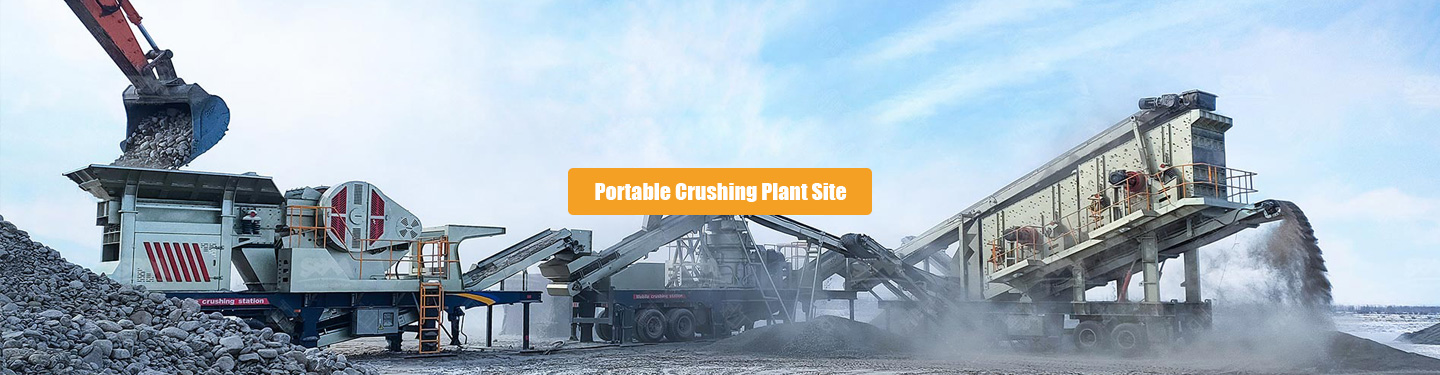
A vibrating screener (also known as a vibrating screen or vibrating sieve) is a crucial piece of equipment widely used in various industries for separating and grading materials by particle size. From mining and construction to food processing and pharmaceuticals, vibrating screeners help ensure that materials are properly sorted, improving product quality and processing efficiency.
What Is a Vibrating Screener?
A vibrating screener, also known as a vibrating sieve or vibrating screen, is a machine designed to separate particles of different sizes through a screen mesh. The machine uses vibration to move materials across the screen, allowing smaller particles to pass through while larger particles are retained on the surface. This mechanical screening process is vital for grading, sizing, and classifying bulk materials.
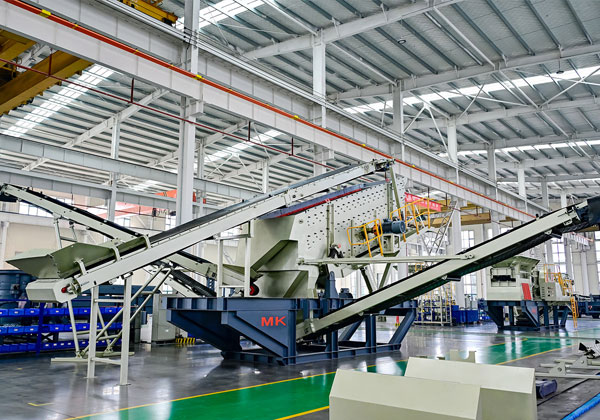
Key Components of a Vibrating Screener
-
Screen Deck: The mesh or perforated plate where material separation occurs.
-
Vibrating Motor: Generates vibration to move the material across the screen.
-
Springs: Support the screen and absorb vibration to prevent damage to the structure.
-
Feed Hopper: Where raw material is introduced.
-
Discharge Ports: Separate outlets for different particle sizes.
How Does It Work?
The vibrating screener uses one or more motors or electromagnetic drives to create rapid vibrations. These vibrations cause the material fed onto the screen to jump and shift, improving the separation efficiency. The frequency, amplitude, and angle of the vibrating screen can be adjusted to suit different materials and particle sizes.
Materials are usually fed from one end and, due to vibration, move progressively across the screen surface. Smaller particles fall through the mesh openings into a collection area or conveyor belt, while larger particles travel further along the screen for separate collection or further processing.
Specifications – Technical Data
| Model | Size W×L (mm) |
Number of decks |
Incline (°) |
Mesh Size (mm) |
Max input size (mm) |
Oper.Speed (RPM) |
Double amplitude (mm) |
Capacity (t/h) |
Power (kW) |
| S5X1545-2 | 1500×4500 | 2 | 18(18-25) | 2-70 | 200 | 800-900 | 7-12 | 45-380 | 11 |
| S5X1545-3 | 1500×4500 | 3 | 18(18-25) | 2-70 | 200 | 800-900 | 7-12 | 45-380 | 15 |
| S5X1845-2 | 1800×4500 | 2 | 18(18-25) | 2-70 | 200 | 800-900 | 7-12 | 60-450 | 15 |
| S5X1845-3 | 1800×4500 | 3 | 18(18-25) | 2-70 | 200 | 800-900 | 7-12 | 60-450 | 22 |
| S5X1860-2 | 1800×6000 | 2 | 18(18-25) | 2-70 | 200 | 800-900 | 7-10 | 75-600 | 15 |
| S5X1860-3 | 1800×6000 | 3 | 18(18-25) | 2-70 | 200 | 800-900 | 7-12 | 75-600 | 30 |
| S5X1860-4 | 1800×6000 | 4 | 18(18-25) | 2-70 | 200 | 800-900 | 7-12 | 75-600 | 37 |
| S5X2160-2 | 2100×6000 | 2 | 18(18-25) | 2-70 | 200 | 800-900 | 7-12 | 85-700 | 22 |
| S5X2160-3 | 2100×6000 | 3 | 18(18-25) | 2-70 | 200 | 800-900 | 7-12 | 85-700 | 30 |
| S5X2160-4 | 2100×6000 | 4 | 18(18-25) | 2-70 | 200 | 800-900 | 7-11 | 85-700 | 37 |
| S5X2460-2 | 2400×6000 | 2 | 18(18-25) | 2-70 | 200 | 800-900 | 7-12 | 100-800 | 22 |
| S5X2460-3 | 2400×6000 | 3 | 18(18-25) | 2-70 | 200 | 800-900 | 7-11 | 100-800 | 30 |
| S5X2460-4 | 2400×6000 | 4 | 18(18-25) | 2-70 | 200 | 800-900 | 7-10 | 100-800 | 37 |
| S5X2760-2 | 2700×6000 | 2 | 18(18-25) | 2-70 | 200 | 800-900 | 7-12 | 120-900 | 30 |
| S5X2760-3 | 2700×6000 | 3 | 18(18-25) | 2-70 | 200 | 800-900 | 7-11 | 120-900 | 37 |
| S5X3072-2 | 3000×7200 | 2 | 20(20-25) | 2-70 | 200 | 800-900 | 7-11 | 150-1200 | 37 |
| S5X3075-2T | 3000×7200 | 2 | 20(20-25) | 2-150 | 300 | 800-900 | 7-12 | 180-1800 | 22×2 |
| S5X3075-3T | 3000×7200 | 3 | 20(20-25) | 2-150 | 300 | 800-900 | 7-12 | 180-1800 | 30×2 |
| S5X3680-2T | 3600×7500 | 2 | 21(20-25) | 2-150 | 300 | 800-900 | 7-12 | 225-2250 | 30×2 |
| S5X3680-3T | 3600×7500 | 3 | 20(20-25) | 2-150 | 300 | 800-900 | 7-12 | 225-2250 | 37×2 |
Note:
1, No standard vibrating screen with only one decks.
2, The processing amount listed in the table is based on the dry bulk density graded limestone 1.6t / m3 for a given amount of processing listed as a guide.