
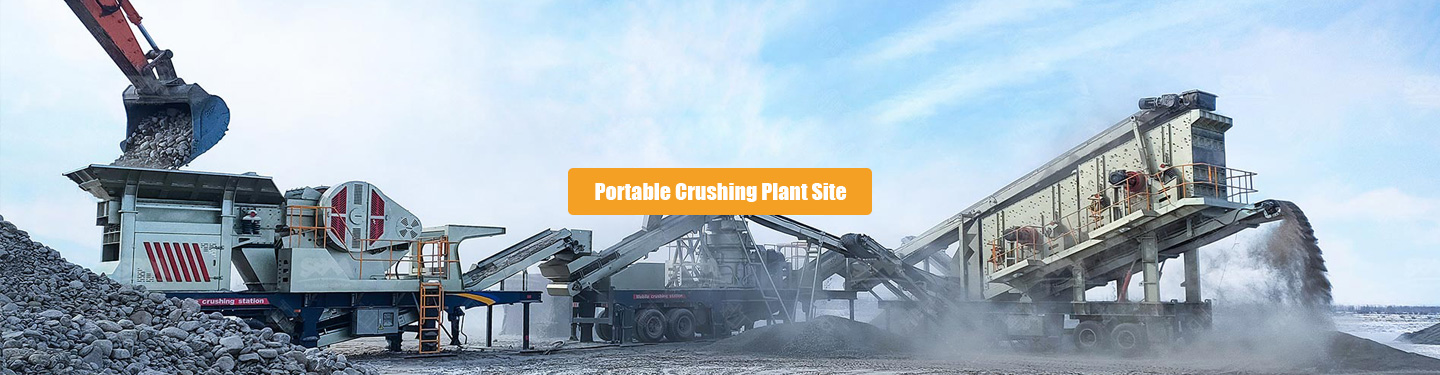
In the relentless pursuit of mineral wealth, the global mining industry faces a perennial adversary: high-hardness ores. From the abrasive depths of granite quarries to the iron-rich veins of the Taconite ranges, the ability to efficiently reduce rock size is the difference between a profitable operation and a logistical nightmare.
As we move through 2026, the consensus among metallurgical engineers and site managers has shifted. While various technologies vie for dominance, the multi-cylinder hydraulic cone crusher has emerged as the definitive “best choice” for tackling the world’s most stubborn materials.
1. The Theoretical Basis: Why Hardness Matters
To understand why certain machines fail where others thrive, we must look at the mechanics of rock fragmentation. Hard ores—typically defined by a high Bond Work Index (BWI) and compressive strengths exceeding 200 MPa—do not break easily under impact.
The Mechanics of Failure
According to the Mohr-Coulomb failure criterion, brittle rock fails when the shear stress exceeds its internal cohesion.
-
Impact Crushing: High-speed blow bars strike the ore. For hard ores, this results in extreme wear on the machine rather than the rock.
-
Compression Crushing: This is the “slow and steady” approach. By applying massive, controlled pressure, the machine forces the ore to exceed its elastic limit, causing it to shatter along natural cleavage planes.
2. The Primary Contender: The Heavy-Duty Jaw Crusher
For the initial stage of reduction (primary crushing), the Jaw Crusher remains the undisputed king of hard ore.
Why it works:
-
Simple Geometry: The “V” shaped crushing chamber allows for large feed sizes.
-
High Strength Construction: Modern jaw crushers utilize E-frame designs and heavy-duty manganese liners to withstand the massive reactive forces of hard basalt or quartzite.
-
Cost-Efficiency: It offers the lowest cost-per-ton for primary reduction because it minimizes the number of moving parts exposed to the abrasive ore.
Expert Insight: “In a hard rock circuit, the Jaw Crusher is your offensive line. It takes the brunt of the hit so the rest of the plant can score.” — Lead Engineer, Global Mining Solutions.
3. The Gold Standard: High-Efficiency Cone Crushers
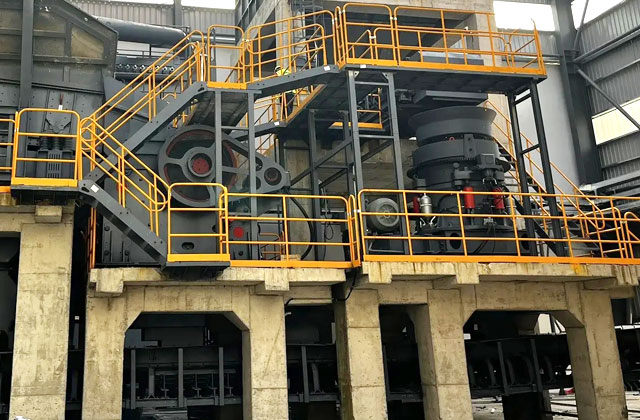
While the jaw crusher starts the job, the Hydraulic Cone Crusher is where the real efficiency happens. For secondary and tertiary stages, it is the superior choice for hard ores due to a phenomenon known as laminated crushing.
The Advantage of Laminated Crushing
Unlike older models that rely on “single-particle” crushing, modern high-efficiency cone crushers use a high swing frequency and large stroke. This creates a dense “layer” of material in the crushing chamber.
-
Rock-on-Rock Attrition: The ore particles crush each other. This reduces wear on the expensive manganese liners.
-
Improved Grain Shape: It produces a more cubical final product, which is essential for high-quality construction aggregates.
| Feature | Impact Crusher | Cone Crusher |
| Material Hardness | Soft to Medium | Hard to Extra Hard |
| Abrasiveness | Low Tolerance | High Tolerance |
| Maintenance Frequency | High (in hard rock) | Low to Moderate |
| Operating Cost (OPEX) | Expensive (parts) | Economical |
The Verdict: A Holistic Strategy
The “best” choice is rarely a single machine, but rather a compression-centric circuit.
For hard ores, the most cost-effective and energy-efficient logic follows this path:
-
Primary: A heavy-duty Jaw Crusher to handle the initial bulk.
-
Secondary/Tertiary: High-performance Cone Crushers to exploit inter-particle crushing.
In 2026, the industry has shifted away from “brute force” impact crushing (which leads to astronomical maintenance costs in hard rock) toward these sophisticated compression models. By aligning equipment choice with the theoretical fracture mechanics of the ore, mining operations can ensure longevity, lower the cost-per-ton, and maintain a competitive edge in a demanding market.