
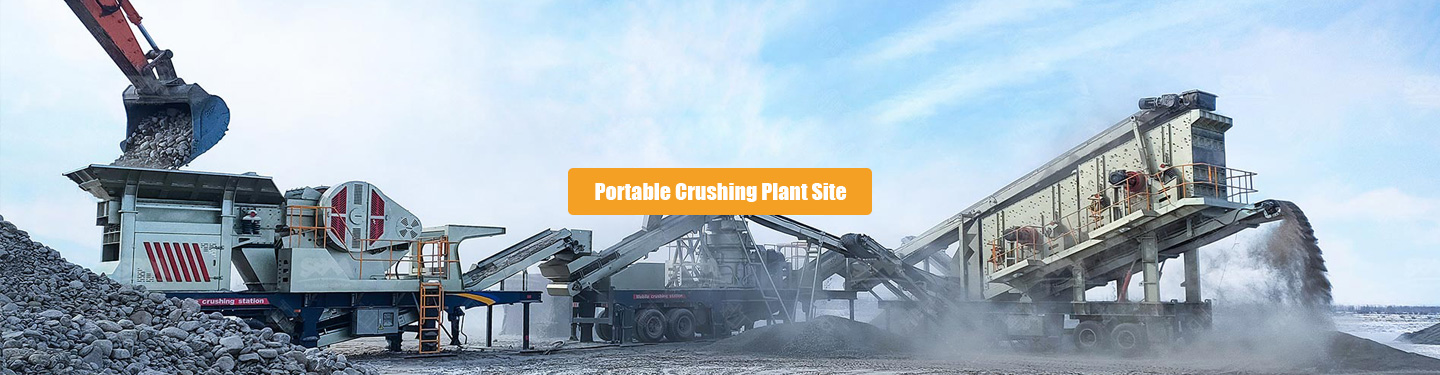
Based on recent fiscal audits across 50+ global high-yield quarries, the biggest threat to your 2026 balance sheet is not the initial equipment price. It is the invisible operational bleed occurring between the primary jaw and the secondary cone. The financial reality of the aggregate market demands strict scrutiny of the Total Cost of Ownership (TCO). When investors evaluate 150-350 t/h production targets, traditional fixed-line infrastructure often masks heavy capital burdens beneath concrete foundations and inflexible logistics. Deploying a portable crushing plant like the NK or K3 series shifts the financial paradigm, transforming fixed CAPEX into manageable OPEX while preserving gross operational margins.
Eradicating Foundation CAPEX: The Quick-Installation Financial Impact
Capital tied up in concrete curing and structural steel delays represents a 30-day financial freeze before a single ton of rock is crushed.
Traditional fixed crushing lines demand extensive topographical surveying, deep concrete pouring, and rigid steel frameworks. These civil engineering requirements routinely account for 15% to 20% of the total project CAPEX. The NK Series, specifically models like the NK75J, bypasses this fiscal sinkhole entirely through a pneumatic tire-mounted chassis designed for foundation-free deployment. The engineering physics here translate directly to financial velocity. By eliminating the necessity for heavy civil works, operators achieve “rapid-deployment,” shrinking the installation-to-production timeline from weeks to mere days. The asset begins generating revenue almost immediately, aggressively accelerating the amortization schedule.
Site logistics dictate that moving a fixed plant to chase a retreating quarry face is financially ruinous. Portable systems travel with the blast zone. This internal mobility drastically cuts down the cycle times of primary haul trucks, reducing fleet fuel consumption and tire wear—two of the most volatile line items on any site manager’s ledger.
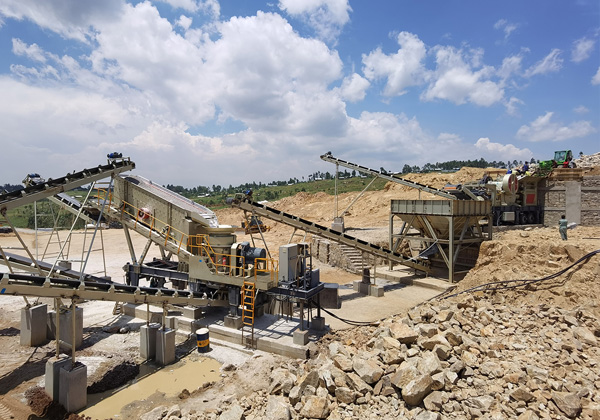
Energy Hedging: Dual-Power Architectures vs. Diesel Volatility
Relying solely on diesel power exposes operational margins to the unpredictable volatility of global energy markets.
The energy density required to fracture 680 mm feed material at 350 tons per hour is immense. An NK75J operates with a core power requirement of 141.4 kW. When evaluating the cost-per-ton, energy consumption is the dominant variable. Advanced portable stone crusher now feature dual-power systems, allowing site investors to toggle between onboard diesel generators and external municipal grid connections. This flexibility acts as a critical financial hedge. When local electricity rates are low, tapping into the grid provides a highly stable, low-cost energy source. During grid blackouts or in deep-pit locations where running high-voltage cables is logistically impossible, the diesel drive ensures operational uptime is never compromised.
Wear Part Lifecycles: Controlling the OPEX Hemorrhage
Manganese liner degradation and blow-bar fatigue account for up to 40% of secondary crushing OPEX in highly abrasive silica operations.
The physics of crushing rock do not care about your fiscal projections. Processing high-Mohs granite or basalt rapidly accelerates the wear on jaw plates, cone mantles, and impactor blow bars. The financial impact is twofold: the direct procurement cost of the replacement parts and the hidden drag of maintenance downtime. Modern portable crushers mitigate this through optimized kinematic geometries. By ensuring the rock-on-rock crushing action takes the brunt of the kinetic energy, the actual steel wear is minimized. An extended maintenance interval directly correlates to higher system availability. Every hour a machine is locked out for a liner change is an hour of lost revenue.
Strategic procurement demands forecasting the service life of these consumables. If an NK100E (requiring 138.5 kW) is constantly stalled due to premature toggle plate failure, the asset is bleeding cash. High-chromium alloys and heavy-duty eccentric shafts are non-negotiable for protecting long-term ROI.
Labor Automation: Downsizing Operational Overhead
Every manual intervention point in a crushing circuit is a recurring line item on the monthly payroll.
Labor is a fixed, compounding cost. The K3 and NK series integrate sophisticated PLC control systems that centralize operation. Remote monitoring, automated CSS (Closed Side Setting) adjustments, and fault diagnostics reduce the need for a massive on-site crew. Instead of deploying five technicians to monitor temperatures, grease bearings, and clear jams, a single operator can oversee the entire portable aggregate plant from a tablet. This reduction in human overhead immediately lowers the cost-per-ton. The system’s ability to self-regulate feed rates based on primary crusher amperage prevents catastrophic electrical trips, ensuring the continuous operational uptime necessary to meet harsh production quotas.
Site Ledger: Capital Efficiency Metrics for NK75J Integration
- Max Feed Capacity: 680 mm
- Total Weight: 39 Tons
- Primary Machine: PE3040 Jaw Crusher
- Target Capacity: 150-350 t/h
- Power Consumption Baseline: 141.4 kW
Technical Index: LH-OPERATING COSTS OF PORTABLE STONE CRUSHER-April/2026-Ref-#49182
Chief Financial Officer’s Audit: Diagnosing Unseen Margin Leaks in NK100E Operations
- Why does the calculated cost-per-ton often exceed projections during the first quarter of mobile operations?
- Data from recent field audits indicates that operators frequently fail to account for the learning curve associated with optimal feeding techniques. If the 6m³ hopper of the FK0936 Vibrating Feeder is persistently starved or overfilled, the resulting uneven load spikes the 138.5 kW motor’s energy draw, ruining efficiency projections.
- How does rapid site relocation impact the overall ROI timeline?
- Historically, fixed plants incur massive teardown and reassembly costs when a quarry face is exhausted. By contrast, a portable unit can be hooked to a prime mover and repositioned within hours, completely deleting the logistics delay from the amortization schedule.
- What is the financial risk of ignoring automated lubrication systems on portable units?
- A catastrophic bearing failure due to manual greasing negligence will instantly halt production. For a machine rated at 350 t/h, a 48-hour downtime window translates to thousands of tons of lost aggregate sales, dwarfing the cost of the automated grease pump itself.
- How do dual-power setups mathematically reduce TCO over a 5-year cycle?
- The volatility patterns in regional electricity costs and diesel fuel present a constant threat. By utilizing the 141.4 kW system on electric grid power during off-peak rate hours, and switching to diesel only during peak tariffs or grid instability, the blended energy expenditure per shift drops significantly.
Optimizing Asset Amortization in High-Yield Quarries
Securing the financial viability of a portable crushing operation requires acknowledging that the 141.4 kW power demand and the 350 t/h throughput form a rigid mathematical boundary that dictates your exact cost-per-ton. When site managers fail to leverage dual-power systems to hedge against fuel volatility, or when they ignore the compounding OPEX of manual intervention, the resulting energy hemorrhage and excessive wear part consumption will inevitably trigger severe cash flow bottlenecks next month. Enforce strict maintenance intervals and transition to automated mobile architectures to permanently lock in your profit margins.
Stop Guessing on Fuel and Wear Expenditures
“Assess your true operational overhead before committing capital.” — From the Desk of your Investment Strategist